
Rishikesh to Mahavatar Babaji Cave: Route, Sacred Stops & Travel Guide
Travel from the Ganga valley into the Garhwal and Kumaon Himalayas. Discover sacred river confluences, old stone temples, mountain shrines and the walking trail to Mahavatar Babaji Cave near Kukuchina.
A Himalayan journey from the Ganga to Kumaon
For travellers starting in Rishikesh, the journey to Mahavatar Babaji Cave is more than a drive to one spiritual destination. The route offers a chance to see the rivers, temple towns and mountain communities that make Uttarakhand special. With thoughtful planning, you can stop at important places without turning every day into a race against the clock.
Mahavatar Babaji Cave is in the Pandukholi mountain area near Kukuchina, in the wider Dwarahat region of Almora district. It is revered by many followers of Kriya Yoga. The final approach involves walking, so allow enough time for the trail and return in daylight. For a longer spiritual itinerary, see our Spiritual Uttarakhand Tour to Babaji Cave and Dwarahat.
A local travel note: Mountain distances can be misleading. Winding roads, weather, traffic, temple visits and walking sections all affect the schedule. The places in this guide form a wider journey; they do not all sit directly beside one single road. Check the route and local access before departure.
Rishikesh to Mahavatar Babaji Cave route at a glance
A practical route usually moves through the Garhwal river valleys before reaching the Kumaon hills around Dwarahat and Kukuchina. The exact order of stops depends on your overnight location and which places you want to explore.
| Journey stage | Places to consider | Planning suggestion |
|---|---|---|
| Leaving Rishikesh | Vashishta Cave, Devprayag | Start early and keep the first day flexible. |
| Garhwal river valleys | Dhari Devi, Rudraprayag, Karnaprayag | Choose stops according to daylight and road conditions. |
| Temple heritage route | Adi Badri, Dwarahat temple groups | Allow extra time for detours and exploring temple sites. |
| Kumaon spiritual region | Dunagiri Mata Temple, Pandavkholi, Babaji Cave | Plan the cave walk as a dedicated excursion and verify local access. |
Important: The route table is a planning overview, not a promise of exact driving times. Confirm the current route with your driver or a reliable map before travelling.
1. Vashishta Cave — a quiet pause beside the Ganga
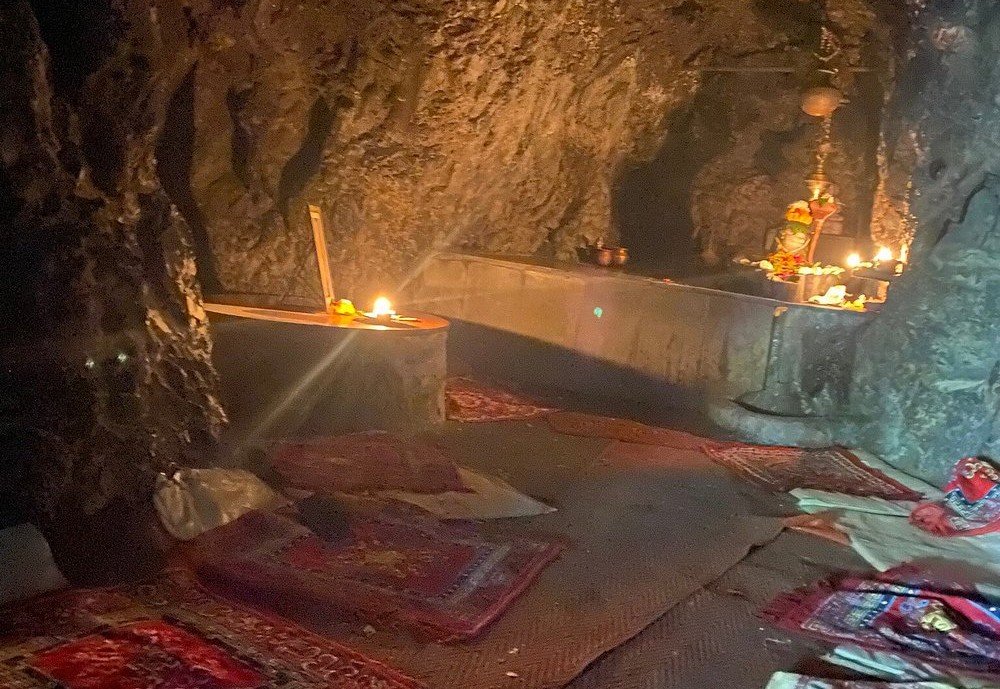
Vashishta Cave, also known as Vashishta Gufa, is a recognised meditation place near Rishikesh. Set close to the Ganga and surrounded by trees and foothills, it offers a quieter atmosphere than the busy parts of town. Visitors often come to sit peacefully, meditate or spend a little time near the river.
Local tradition associates the cave with Sage Vashishta. The cave itself is simple, and the appeal of the visit is often the calm setting rather than a long list of attractions. If you are leaving Rishikesh for Babaji Cave, this can be a meaningful first stop before continuing towards Devprayag.
2. Devprayag Sangam — where two rivers form the Ganga
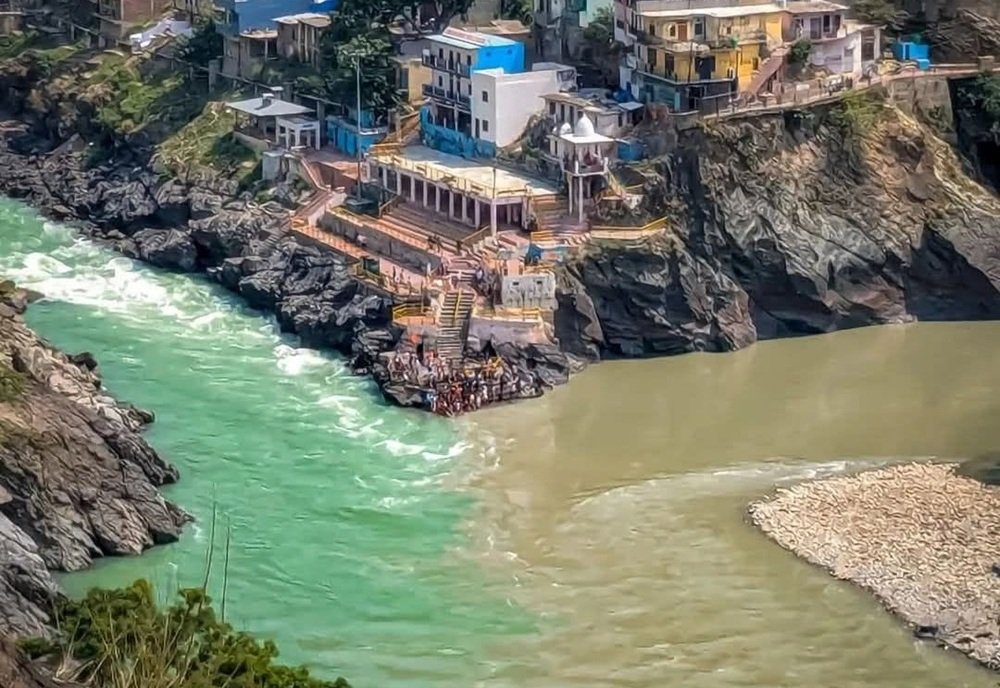
Devprayag is one of Uttarakhand’s important pilgrimage towns. Here the Alaknanda and Bhagirathi meet, and the river is known as the Ganga from this confluence onward. The colours and movement of the two rivers can be striking, especially when viewed from a safe viewpoint above the water.
The town rises along steep slopes, with temple buildings, traditional houses and stone steps shaping its character. Raghunath Temple is an important place of worship. If you have time, walk slowly through the old town and take in the views instead of making this only a quick photo stop.
3. Dhari Devi Temple — a revered shrine beside the river
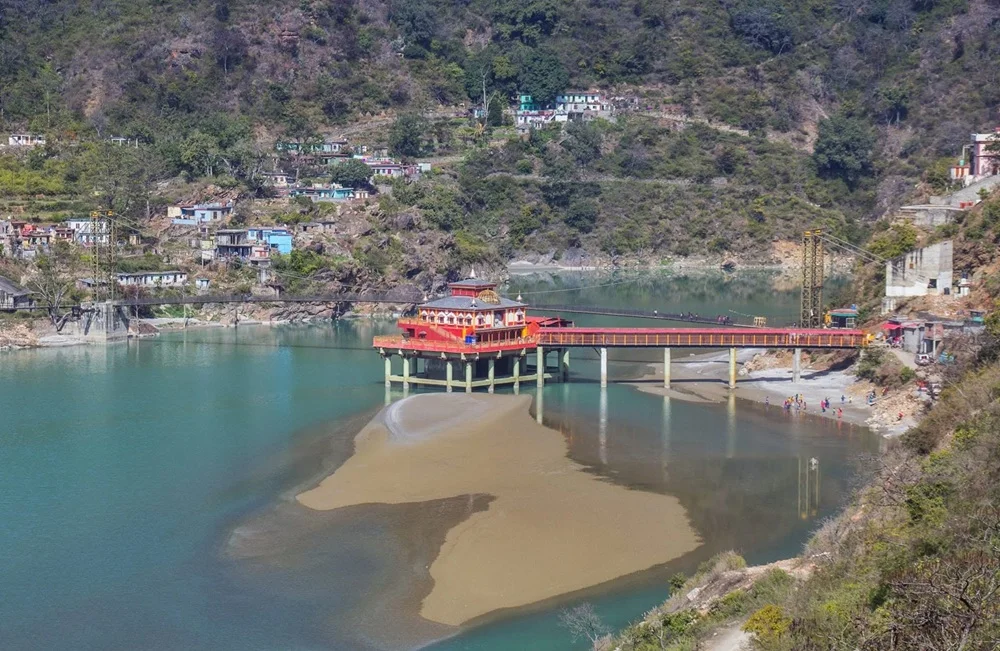
Dhari Devi Temple is a well-known shrine dedicated to Goddess Dhari Devi, set beside the Alaknanda River in the Garhwal region. Local devotees visit to offer prayers, and the temple is an important part of the religious landscape of this valley.
For travellers, a stop here gives a glimpse of the strong relationship between Himalayan communities and their local deities. The temple can be included on a wider journey towards Rudraprayag and the Kumaon region, but it should be planned around the actual route and available daylight.
4. Rudraprayag Sangam — meeting of the Alaknanda and Mandakini
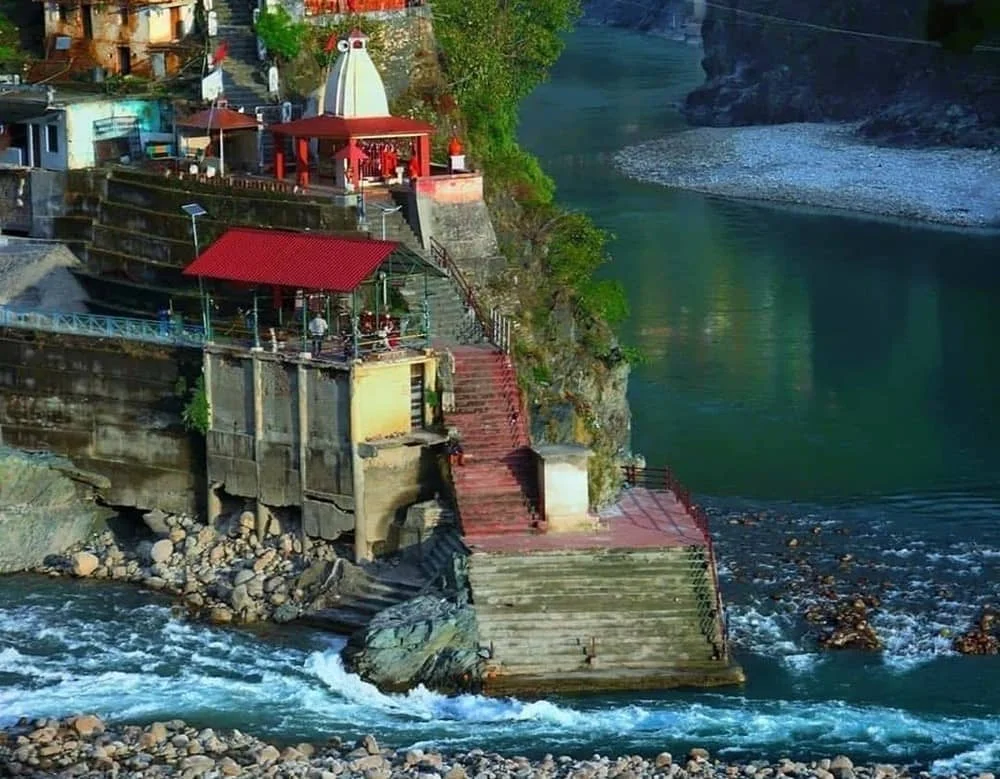
At Rudraprayag, the Mandakini River joins the Alaknanda. The Mandakini flows down from the Kedarnath region, and the meeting of the rivers is one of the notable sangams of Garhwal. The surrounding hills and the movement of the water give the town a distinctive mountain setting.
Rudraprayag is also a useful junction for travellers heading towards different parts of the Himalayas. Depending on your pace, it may be a good place for a meal break or an overnight stay rather than trying to cover too much road in one day.
5. Karnaprayag Sangam — the Alaknanda and Pindar rivers
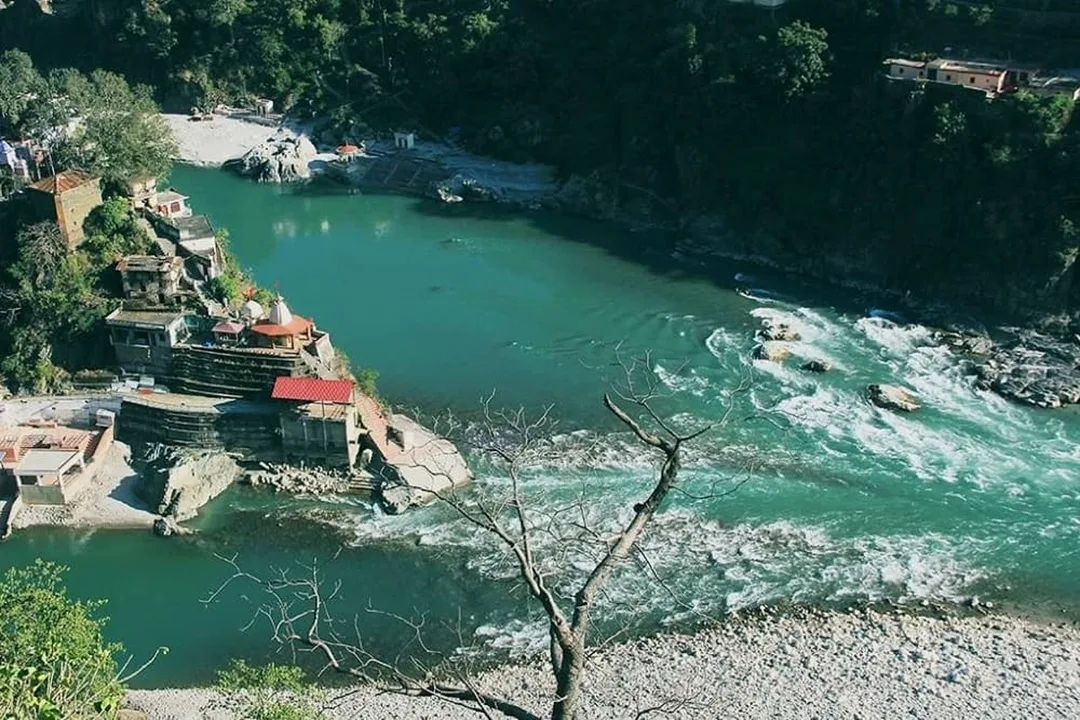
Karnaprayag stands at the meeting of the Alaknanda and Pindar rivers. It is one of the traditional Panch Prayag confluences and is connected in local religious tradition with Karna from the Mahabharata.
The town is surrounded by steep hills and everyday mountain settlements. Travellers can pause here to see the river confluence and take a break before continuing towards Adi Badri or the Dwarahat region. If you are making several stops, consider an overnight stay rather than driving late into the evening.
6. Adi Badri Group of Temples — a glimpse of ancient heritage
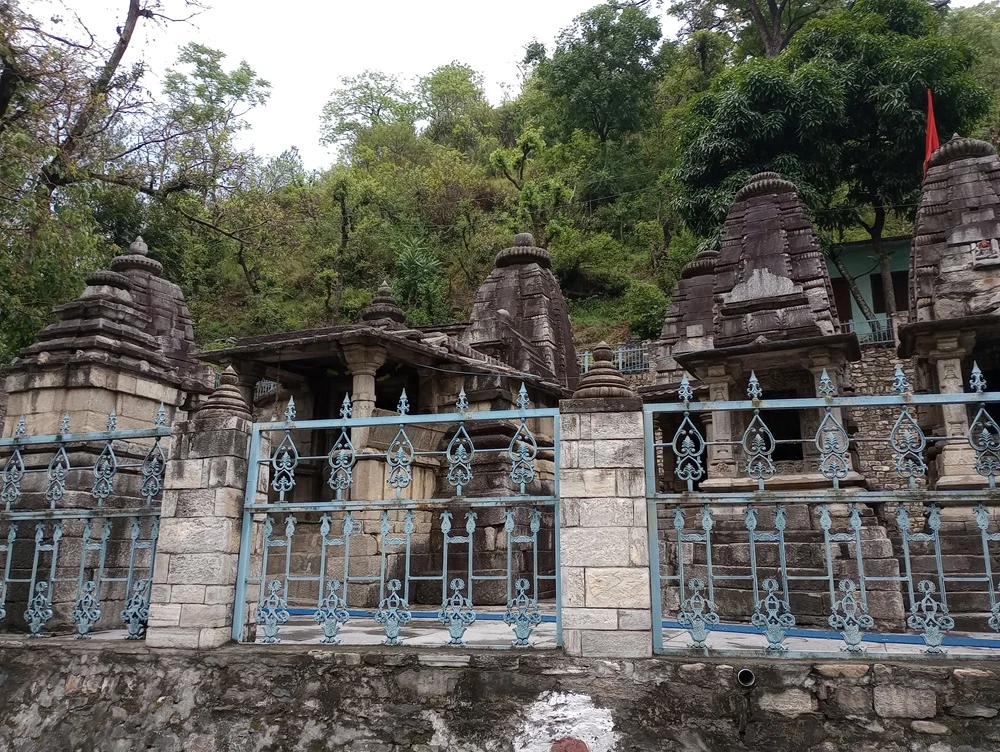
Adi Badri is a group of historic temples traditionally associated with the worship of Lord Vishnu and the wider Badri pilgrimage landscape. The stone shrines and their quiet surroundings preserve an important part of the religious and architectural heritage of this region.
The complex offers a different experience from the larger, busier pilgrimage centres. Visitors interested in temple architecture and local history may enjoy taking time to observe the stonework and the setting. Adi Badri can be included in a wider journey from Karnaprayag towards Dwarahat, but it adds route and sightseeing time.
7. Dwarahat Temple Groups — the historic temple town of Kumaon
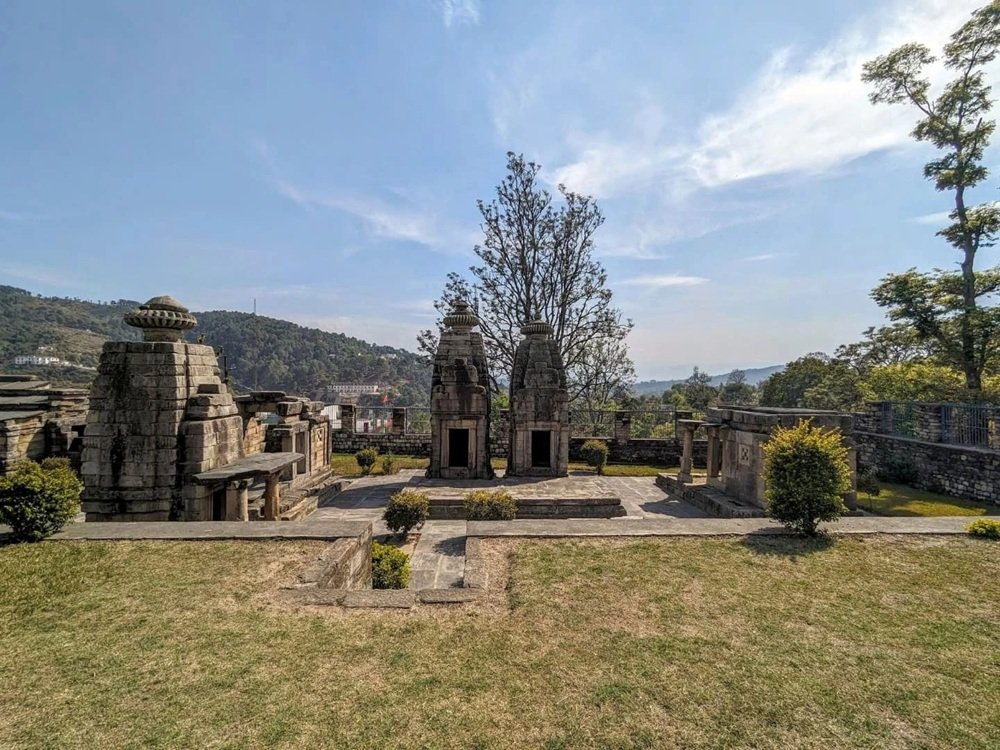
Dwarahat, in Almora district, is known for historic stone temple groups associated with the Katyuri-era heritage of Kumaon. The compact shrines, carved details and traditional masonry reflect the long religious history of the region.
The town is also a practical base for visits to Dunagiri Mata Temple, Kukuchina and Mahavatar Babaji Cave. If time allows, explore selected temple groups and local lanes instead of passing straight through. The sites are spread around the area, so allow time for local driving and walking.
8. Dunagiri Mata Temple — a mountain shrine dedicated to the Goddess
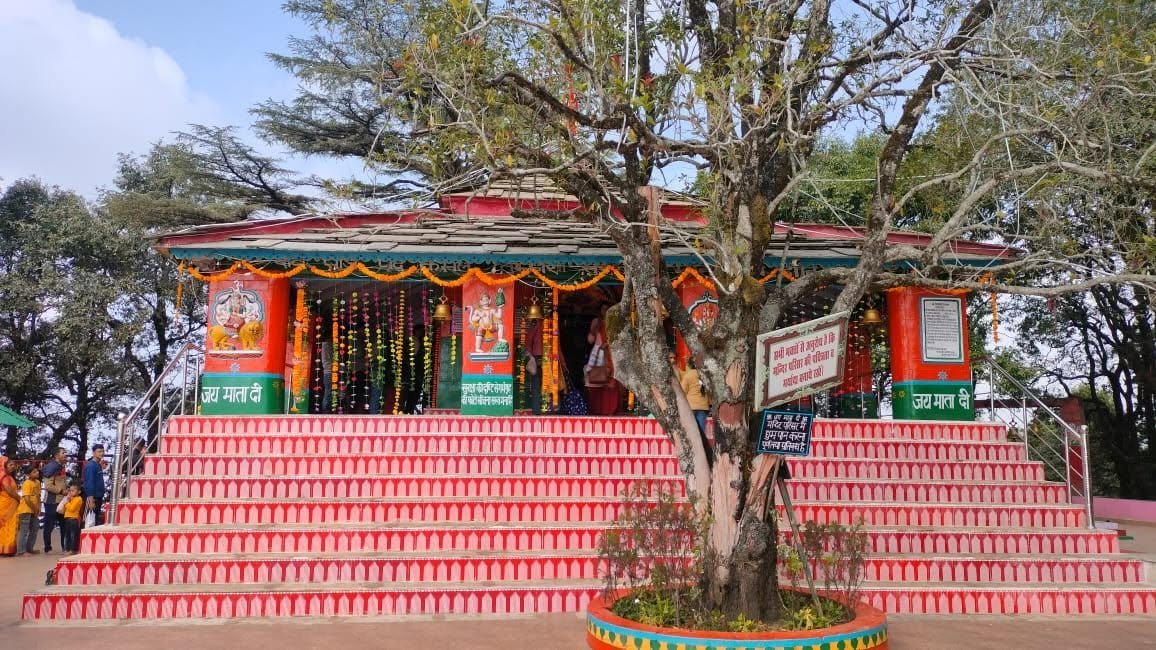
Dunagiri Mata Temple is a revered shrine in the hills near Dwarahat. Devotees visit to pray to Goddess Dunagiri, and the mountain setting gives the temple a special place in many local and regional pilgrimages.
The visit may include steps and uphill walking. Weather and visibility can change, so allow time and avoid squeezing the temple and cave excursion into a rushed schedule. Dunagiri and Mahavatar Babaji Cave are separate destinations, even though both can be included in a wider spiritual journey around Dwarahat and Kukuchina.
9. Pandavkholi Ashram and Temple — a quiet mountain retreat
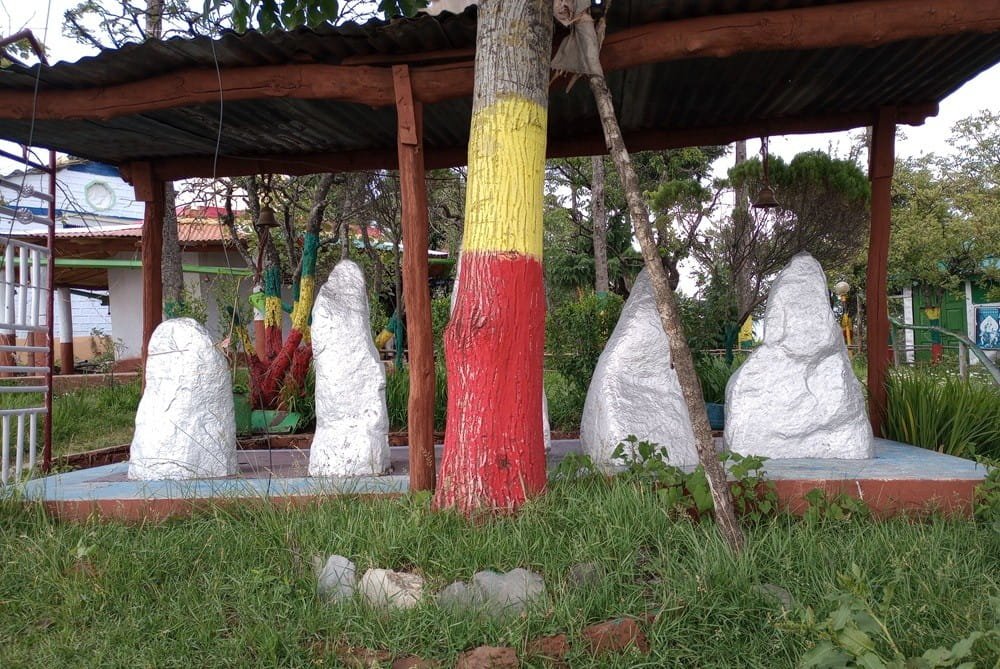
Pandavkholi, also written as Pandukholi in some accounts, refers to a mountain area near Kukuchina in the Dwarahat region. It is known for forest paths, peaceful surroundings and spiritual places in the hills. Local stories connect the area with the Pandavas.
The experience here is quieter and more physical than visiting a temple beside the road. The approach to the ashram and nearby sites may involve an uphill walk, and the time required depends on the chosen trail, weather and walking pace. Ask locally which path is suitable for your intended visit.
10. Mahavatar Babaji Cave — a sacred destination in the Kumaon Himalayas
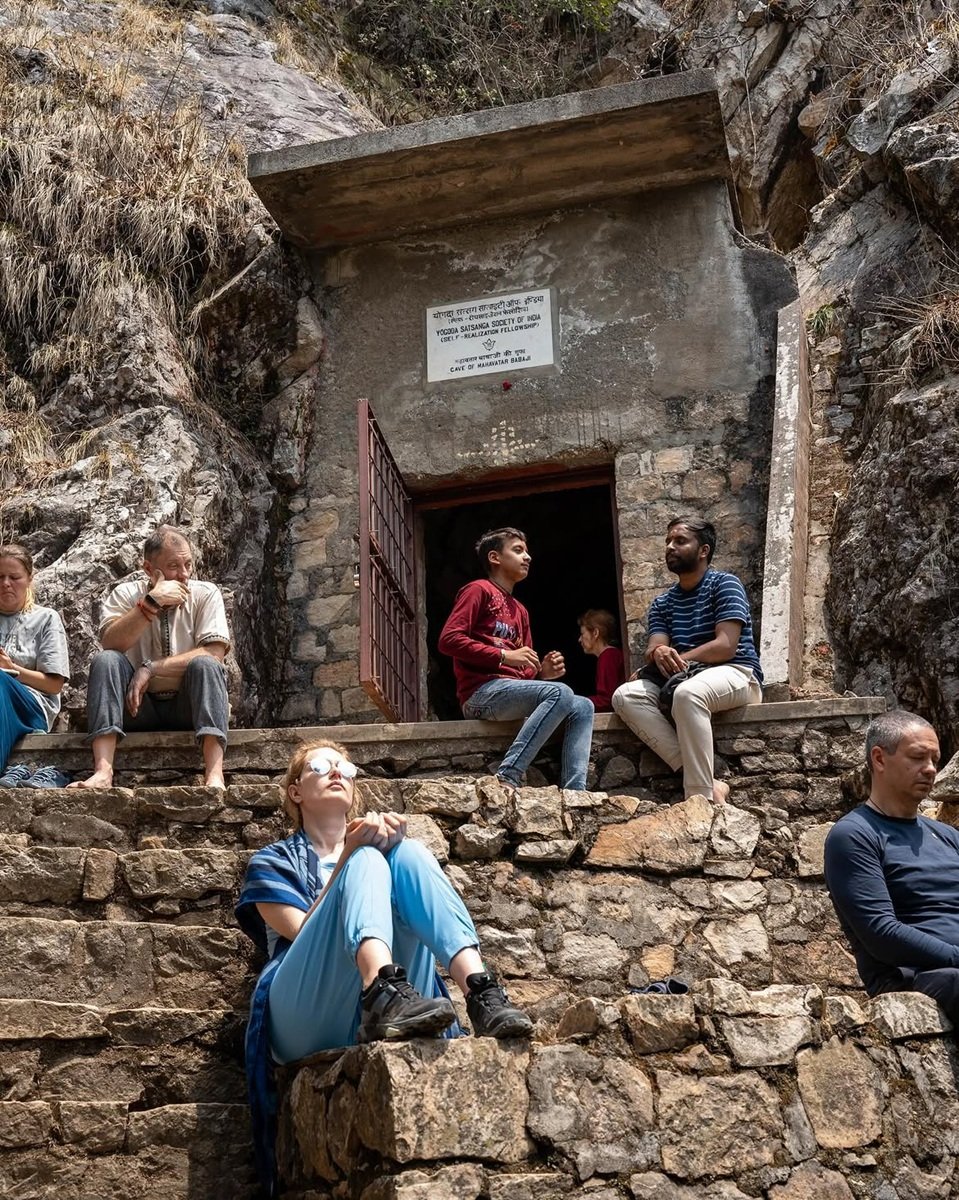
Mahavatar Babaji Cave is the main destination for many travellers making this journey into the Kumaon hills. The cave is in the Pandukholi mountain area near Kukuchina, close to Dwarahat in Almora district. It is especially revered by followers of Kriya Yoga and is associated with the spiritual account of Mahavatar Babaji and Lahiri Mahasaya.
For visitors, the significance of the cave is personal and spiritual. It is not a large commercial attraction; people come for prayer, meditation and quiet reflection. The forested setting and the walk to the site are part of the experience.
After driving towards the local access point near Kukuchina, visitors continue on foot. The uphill approach may feel demanding if you are not used to mountain walking. Trail conditions and the vehicle drop-off point can change, so confirm the current route locally before setting out.
When you reach the cave, keep the atmosphere peaceful, follow local instructions and respect people who may be meditating. Carry your waste back with you and leave the surrounding forest clean.
Read our guide on how to reach Mahavatar Babaji Cave and see available Babaji Cave tour plans.
Suggested 3-day itinerary from Rishikesh to Babaji Cave
This is a practical starting point for selected stops, not a fixed timetable. Visiting all ten places at a relaxed pace may require an extra day or more.
Vashishta Cave, Devprayag and the Garhwal river valleys
Leave Rishikesh early. If access and timing allow, stop at Vashishta Cave, then continue to Devprayag to see the Alaknanda–Bhagirathi confluence. Proceed towards the Dhari Devi region and Rudraprayag, choosing stops according to the road conditions and daylight.
Overnight suggestion: Rudraprayag, or another suitable town based on your final route and pace.
Karnaprayag, Adi Badri and Dwarahat’s temple heritage
Continue towards Karnaprayag and visit the sangam area. If the route and schedule allow, include Adi Badri before proceeding to Dwarahat. Spend the remaining time exploring selected temple groups or rest for the next day’s cave excursion.
Overnight suggestion: Dwarahat or nearby accommodation.
Dunagiri Mata Temple and the cave excursion
Start early and drive towards Kukuchina and the current cave access point. Allow time for the uphill walk, a quiet visit and the return. Dunagiri Mata Temple may be added if the road, trail, walking pace and daylight make it realistic. Pandavkholi may need extra time or a separate visit.
Planning note: Avoid starting the cave walk late in the day. Confirm the route and local access arrangements before departure.
Would you like to visit every place? Consider four days or more so that the route feels comfortable and you have time to explore the temple areas rather than rushing from one stop to the next.
Highlights of the Rishikesh to Babaji Cave route
Sacred river confluences
Pause at Devprayag, Rudraprayag and Karnaprayag, three important river meeting points in Garhwal.
Ancient temple heritage
Explore Adi Badri and Dwarahat’s historic stone temple groups, each with its own regional character.
Spiritual Kumaon
Visit Dunagiri Mata Temple and the wider Kukuchina–Pandukholi area associated with Babaji Cave.
Mountain life and scenery
Experience winding roads, small hill towns, forest trails and the slower pace of Himalayan travel.
Practical tips for visiting Mahavatar Babaji Cave
Mountain journeys are most enjoyable when the schedule has room for changes. Keep these simple points in mind while planning your trip.
- Start early from Rishikesh and avoid packing too many sightseeing stops into one day.
- Check the route carefully: some places require detours from the main road.
- Wear comfortable walking shoes with a good grip for temple grounds and the cave trail.
- Carry drinking water, sun protection, a warm layer and rain protection suitable for the season.
- Check weather and road updates, particularly during the monsoon and winter.
- Respect temple customs and ask before photographing people or sacred interiors.
- Confirm ashram visitor policies directly; access and schedules can vary.
- Plan the cave walk so that you have enough daylight for the return.
- Keep the forest and river areas clean and take all rubbish back with you.
When is a good time to go?
Spring and autumn are often pleasant for temple visits and mountain drives, but conditions vary from year to year. Summer can bring holiday traffic, monsoon weather may cause road delays or landslides, and winter mornings in Kumaon can be very cold. Check the actual forecast for your travel dates before setting out.
Frequently asked questions
How far is Mahavatar Babaji Cave from Rishikesh?
The road distance depends on the route and the starting point. The journey passes through the Garhwal region towards Dwarahat and Kukuchina, and the final approach to the cave is on foot. Check a current map for an accurate distance and travel estimate.
Which places can I visit on the way to Babaji Cave?
Depending on your route and available time, possible stops include Vashishta Cave, Devprayag, Dhari Devi Temple, Rudraprayag Sangam, Karnaprayag Sangam and Adi Badri. Dwarahat’s temple groups, Dunagiri Mata Temple and Pandavkholi can be added to a wider itinerary near the destination.
Can I visit Babaji Cave from Rishikesh in one day?
It can be a demanding trip because it combines a long mountain drive with an uphill walk. If you want to stop at attractions along the way, plan more than one day for a more comfortable visit.
Can I drive directly to Mahavatar Babaji Cave?
No. You can drive towards the local access area near Kukuchina, but the final approach involves walking. The current drop-off point and trail conditions should be confirmed locally.
Can Dunagiri Mata Temple and Babaji Cave be visited on the same day?
It may be possible depending on road access, walking pace, weather and daylight, but it can make for a demanding day. Start early and avoid beginning the cave walk late in the afternoon.
How many days should I allow for all ten places?
Three days can work as a starting plan for selected stops and the cave. If you want to explore all ten places without rushing, consider four days or more, depending on your interests and current road conditions.
Do I need to arrange transport in advance?
Advance arrangements can help for a multi-day mountain journey, especially if you need a vehicle to reach Kukuchina and return after the cave visit. Confirm the vehicle, route, waiting time, overnight stops and total price in writing.
From the Ganga Valley to the Sacred Cave
The road from Rishikesh to Mahavatar Babaji Cave brings together river confluences, old temples, mountain towns and a quiet spiritual destination. Give yourself time to experience the journey at a comfortable pace.
Share your travel dates, group size and preferred pace to discuss a practical route and overnight stops.
Explore Babaji Cave Tours
Read the Travel Guide
Travel information is provided as a planning guide. Confirm current road, weather, temple and trail access before departure.